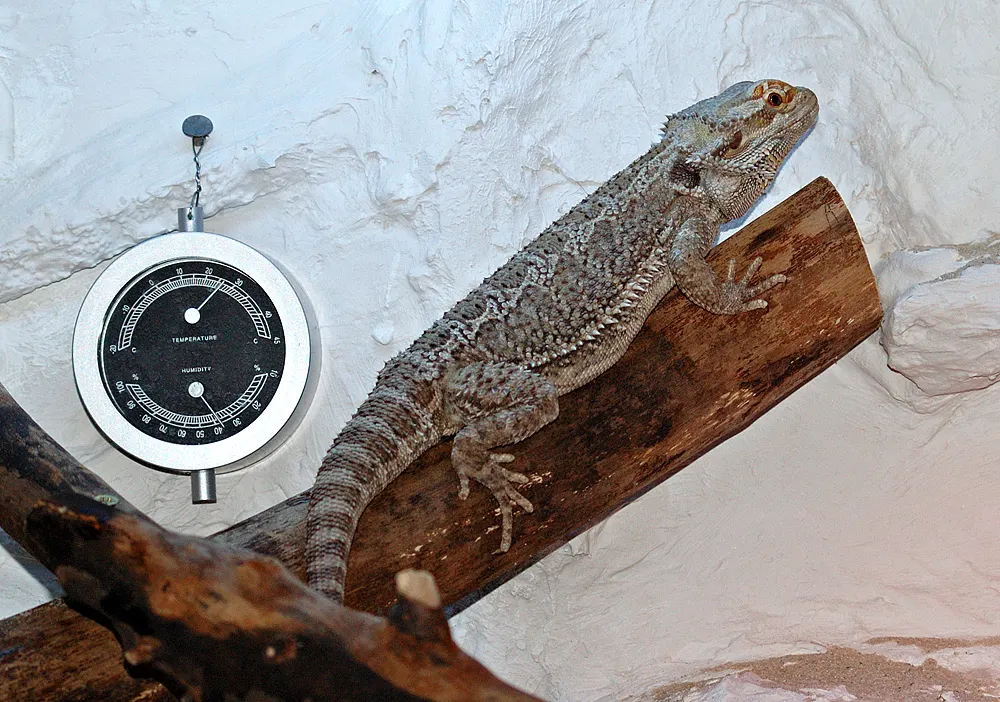
This is the first-time reptile owner checklist I wish someone had handed me before I bought mine. I saw a bearded dragon at a reptile expo, fell for it in about four minutes, and walked out an hour later with an animal and a bag of gear a teenager behind the counter picked out for me. It worked out fine, mostly by luck. I got the tank size right and the heat source wrong, and spent the next two weeks reading care sheets I should have read first.
It’s not species-specific, it’s what anyone needs to sort out before an animal comes home, whether you’ve landed on a bearded dragon, a leopard gecko, or you’re still deciding between the two.
What should you research before you buy a reptile?
Do this part before you buy anything, gear included. A reptile’s adult size, temperature and humidity needs, and lifespan should all be settled facts in your head before you’re standing in a store with an animal already in a bag.
A few things worth confirming specifically:
Adult size. A hatchling bearded dragon or juvenile leopard gecko looks nothing like the animal it becomes. Bearded dragons reach 18 to 24 inches nose to tail as adults and need a tank sized for that, not for the six-inch baby you’re looking at.
Lifespan. Bearded dragons commonly live 8 to 12 years in captivity, leopard geckos often 15 to 20. This is a longer commitment than most first-time buyers expect walking in.
Where the animal is coming from. Captive-bred animals from a reputable breeder or a store that can tell you the breeder’s name tend to arrive healthier and better acclimated to handling than wild-caught or bulk-imported stock. If nobody at the counter can answer where the animal came from, that’s worth asking twice.
Whether a reptile vet exists near you. Not every general vet treats reptiles. Look up an exotics vet, ideally one listed with the Association of Reptile and Amphibian Veterinarians, before you need one, not during an emergency.
Don’t rely on pet store staff for care details. They’re usually trained to sell what’s in stock, not to walk you through species-specific husbandry, and starter kits sold as a bundled package often skip something the animal actually needs.
What gear do you need before the reptile comes home?
Everything on this list should be set up, running, and holding steady temperatures for at least 24 to 48 hours before the animal arrives, not assembled the same afternoon.
| Item | Why it matters |
|---|---|
| Enclosure sized for the adult animal | Buying for adult size once is cheaper than upgrading twice as a juvenile outgrows a starter tank |
| Thermostat | Controls a heat mat or bulb so it can’t run unchecked and overheat the enclosure |
| Heat source (mat, bulb, or both, species dependent) | Reptiles are ectothermic and need external heat to digest food and stay active |
| UVB lighting (mandatory for bearded dragons, increasingly recommended for leopard geckos too) | Needed for vitamin D3 synthesis and calcium metabolism, skipping it risks metabolic bone disease |
| Two accurate digital thermometers, one per side of the gradient | Confirms the warm side and cool side are actually the temperatures you think they are |
| A hygrometer | Tracks humidity, especially if a humid hide is part of the setup |
| Two to three hides | Security on both the warm and cool ends, plus a humid hide for geckos |
| Substrate appropriate to the species | Loose sand and calcium sand carry real impaction risk for young animals of either species |
| A secure, escape-proof lid | Both species are capable of pushing against a loose screen top, especially bearded dragons |
| A shallow water dish | Basic hydration access, sized so a small animal can’t get stuck |
| Calcium powder with D3, plus a multivitamin | Feeder insects alone don’t supply enough calcium for either species |
| A ventilated travel carrier | For the trip home and for every vet visit after that |
Keeper's pick: Digital Reptile Thermometer and Hygrometer Gauge

A stick-on dial thermometer is not accurate enough to trust with an animal's health. This is the kind of cheap digital gauge that actually tells you whether your warm side and humidity are where they need to be, and at this price there's no excuse to run a tank without one on each end of the gradient.
Keeper's pick: Ventilated Reptile Travel Carrier

You'll use this exactly twice as often as you expect: once to bring the animal home, and then every single time you make the trip to an exotics vet after that. A hard-sided, ventilated carrier beats a cardboard box or a loose tote, it won't collapse and it keeps the animal from sliding around on the drive.
How much does a first reptile setup actually cost?
This is where bearded dragons and leopard geckos genuinely diverge, and it’s worth knowing before you pick a species, not after.
| Bearded dragon | Leopard gecko | |
|---|---|---|
| Animal purchase price | Often $40 to $150 from a breeder, more for specific morphs | Often $30 to $100 from a pet store or breeder, more for rare morphs |
| Initial setup, budget tier | Around $600 | Roughly $250 to $400 |
| Initial setup, mid-range | Around $1,190 | Broader range up to roughly $1,230 depending on quality |
| Monthly ongoing costs | Roughly $75 to $175 depending on life stage | Roughly $20 to $50 |
| UVB requirement | Mandatory, higher-output bulb | Optional but increasingly recommended, lower-output bulb |
The gap comes down to two things: bearded dragons need a bigger tank and a stronger UVB bulb from day one, and they eat more as juveniles when they’re feeding three to five times a day. Leopard geckos get away with a smaller footprint and, until recently, no UVB at all, though current guidance leans toward giving them a low-strength bulb too since they benefit from it even if they can technically survive without it on a straight D3 supplement schedule.
For a full breakdown of bearded dragon costs by category, our bearded dragon cost of ownership article has the detailed numbers, and the leopard gecko starter kit checklist does the same for geckos.
What should you do in the first week?
Resist handling for the first several days, ideally a full week. A new reptile in a new enclosure is stressed regardless of species, and handling on top of that slows acclimation and can trigger stress responses like glass surfing, hiding constantly, or refusing food. Let it settle into the space, learn where the hides and the water dish are, and start eating normally before you start picking it up.
Schedule a first veterinary visit within about two weeks of bringing the animal home, with a vet who actually treats reptiles. Bring a fresh fecal sample if you can manage it, sealed in a bag or wrapped in foil, since a basic fecal exam is the easiest way to catch intestinal parasites like coccidia before they become a bigger problem. This is also a good time to get a baseline weight on record, which makes it much easier to notice a real problem down the line versus a normal dip.
If you already keep other reptiles, quarantine the new arrival in a separate room, ideally on a completely separate cleaning routine, until that first vet visit clears it. This matters more than it sounds like it should.
Bearded dragon or leopard gecko, which is the easier first reptile?
Both are considered solid beginner species, and the honest answer depends more on your setup preferences than on either animal being objectively easier. Bearded dragons are more interactive and tend to tolerate handling better day to day, but they need more space, stronger lighting, and a bigger food budget as juveniles. Leopard geckos are smaller, cheaper to house, and more forgiving on lighting, but they’re a ground-dwelling, mostly crepuscular species that won’t bask out in the open the same way a dragon does.
If you’re still weighing the two, our bearded dragon vs leopard gecko comparison goes deeper on exactly this question.
The short version
- Research adult size, lifespan, and species-specific needs before you buy, not after.
- Bearded dragons live 8 to 12 years and reach 18 to 24 inches as adults. Leopard geckos often live 15 to 20 years and stay much smaller.
- Set up and run the full enclosure for 24 to 48 hours before the animal arrives to confirm stable temperatures.
- A thermostat is mandatory with any heat mat or bulb, running one without a thermostat risks burns or overheating.
- UVB is mandatory for bearded dragons and increasingly recommended for leopard geckos.
- Don’t handle a new reptile for at least the first week.
- Book a first vet visit within about two weeks, with a fecal sample if possible.
- Initial bearded dragon setups typically run $600 and up, leopard gecko setups roughly $250 to $400 on the budget end.
Bottom line on your first-time reptile owner checklist
The gear list matters, but the research and the timeline matter just as much. Know the adult size and lifespan you’re committing to, have the enclosure running steady before the animal arrives, leave it alone for the first week, and get it to an exotics vet inside the first two.
If you haven’t settled on a species yet, our how to take care of a bearded dragon and leopard gecko care for beginners guides both walk through daily care in full once the setup is done, and either is a good next stop from here.
For more on what a first reptile vet visit actually covers, VCA Animal Hospitals’ guide to the new reptile visit is worth reading before you go, and Reptiles Magazine’s new reptile owner’s checklist is a solid second opinion on the gear side of things.